Sash cords replacement.
When a cord snaps, the window drops. Done as part of a service package, never on its own.
Scope of works
Sash cord replacement is item 04 of 14.
Included in Restoration and Double-glazing retrofit. We don't take it on as a standalone job — the sashes have to come out for cord work anyway, so it's done alongside the rest of the package.
| No. | Scope item | Restoration | Double-glazing retrofit |
|---|---|---|---|
| 01 | Repair rot — wood-hardener treatment and spliced inlays | ||
| 02 | Unblock painted-shut sashes | ||
| 03 | Service pulleys, hinges and locks | ||
| 04 | Replace sash cords — this page | ||
| 05 | Fix loose joints — reinforce window frames | ||
| 06 | Repair cracked glass | ||
| 07 | Draught-proofing | Optional | |
| 08 | Remove single glazing | ||
| 09 | Rebate sashes and frames for VIG glazing | ||
| 10 | Install vacuum-insulated glazing | ||
| 11 | Add weights to counterbalance heavier glazing | ||
| 12 | Prime exposed timber | ||
| 13 | Ironmongery — install new lifts, fasteners, locks and handles on request | ||
| 14 | Remove rubbish on completion |
A traditional sash hangs on two cotton cords tied to cast-iron weights inside the box. After forty or more years the fibre weakens, frays at the pulley, and parts — and when one goes, the other three on that window are usually the same age. We replace all four together.
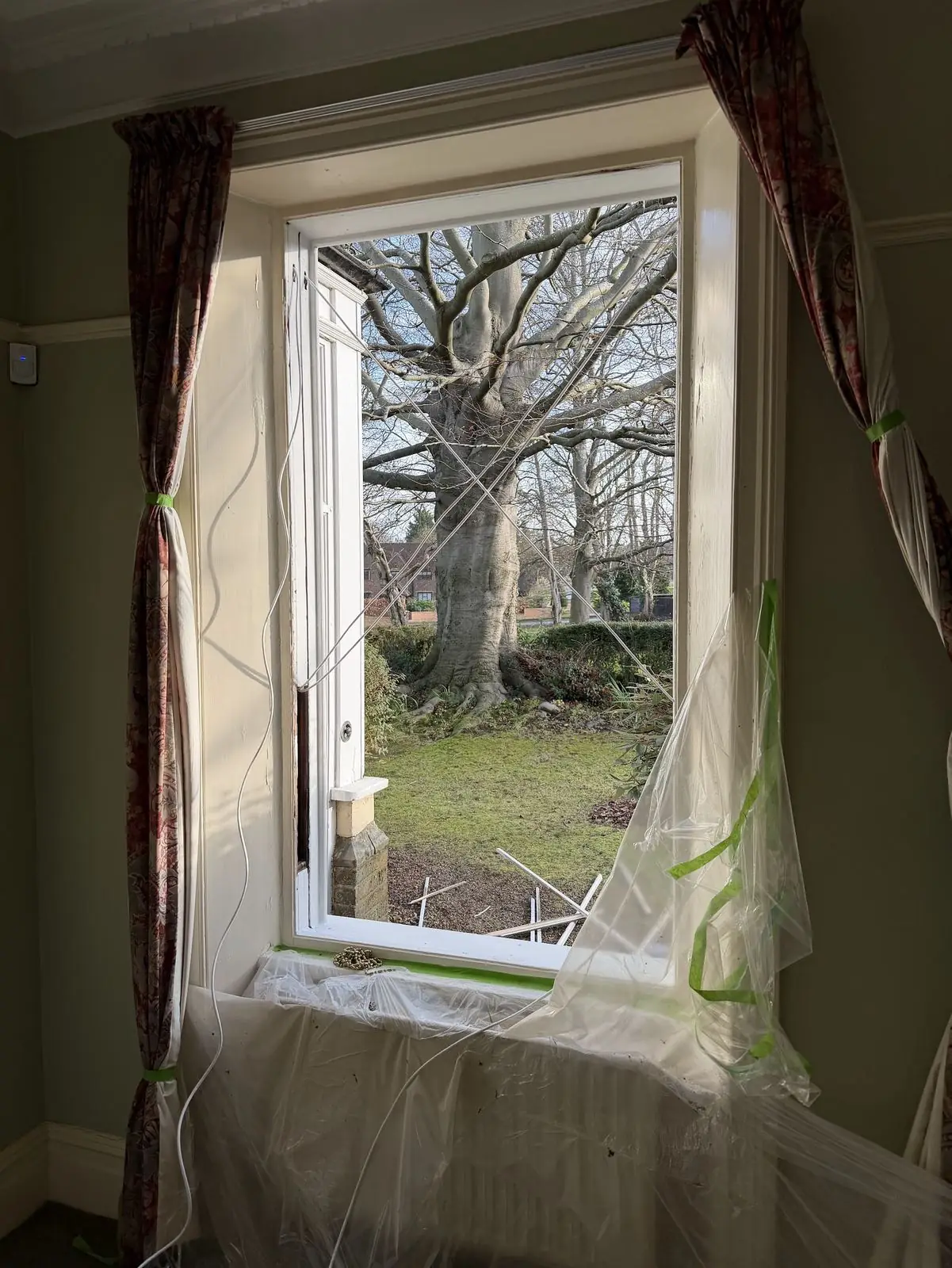
Both sashes come out, the staff and parting beads lift, and the weight pockets at the foot of each jamb are opened. New cord is threaded over each pulley and tied to the weight; pulleys are cleaned and oiled while the box is open; cord length is set so the sash hangs balanced. Standard cord is waxed cotton — the correct material for listed and conservation work. For sashes carrying retrofitted vacuum-insulated glazing, where the dead weight is higher, we use nylon-core cord instead.