Counterbalance weights.
When the glass gets heavier, the iron in the box isn't enough. We add to it, or swap it for lead.
Scope of works
Counterbalance weights is item 11 of 14.
Included in Double-glazing retrofit only — when the new glass is heavier than the original single pane, the weights have to match. We don't take it on as a standalone job.
| No. | Scope item | Restoration | Double-glazing retrofit |
|---|---|---|---|
| 01 | Repair rot — wood-hardener treatment and spliced inlays | ||
| 02 | Unblock painted-shut sashes | ||
| 03 | Service pulleys, hinges and locks | ||
| 04 | Replace sash cords | ||
| 05 | Fix loose joints — reinforce window frames | ||
| 06 | Repair cracked glass | ||
| 07 | Draught-proofing | Optional | |
| 08 | Remove single glazing | ||
| 09 | Rebate sashes and frames for VIG glazing | ||
| 10 | Install vacuum-insulated glazing | ||
| 11 | Add weights to counterbalance heavier glazing — this page | ||
| 12 | Prime exposed timber | ||
| 13 | Ironmongery — install new lifts, fasteners, locks and handles on request | ||
| 14 | Remove rubbish on completion |
A sash holds itself in the air because the weight on the cord matches the weight of the sash. When we retrofit vacuum-insulated glazing — or any double glazing — the sash gets heavier. The original cast-iron weights, sized for a single pane of float glass, no longer balance the load. Released at half-open, the window drops on its own, or fights you on the way up.
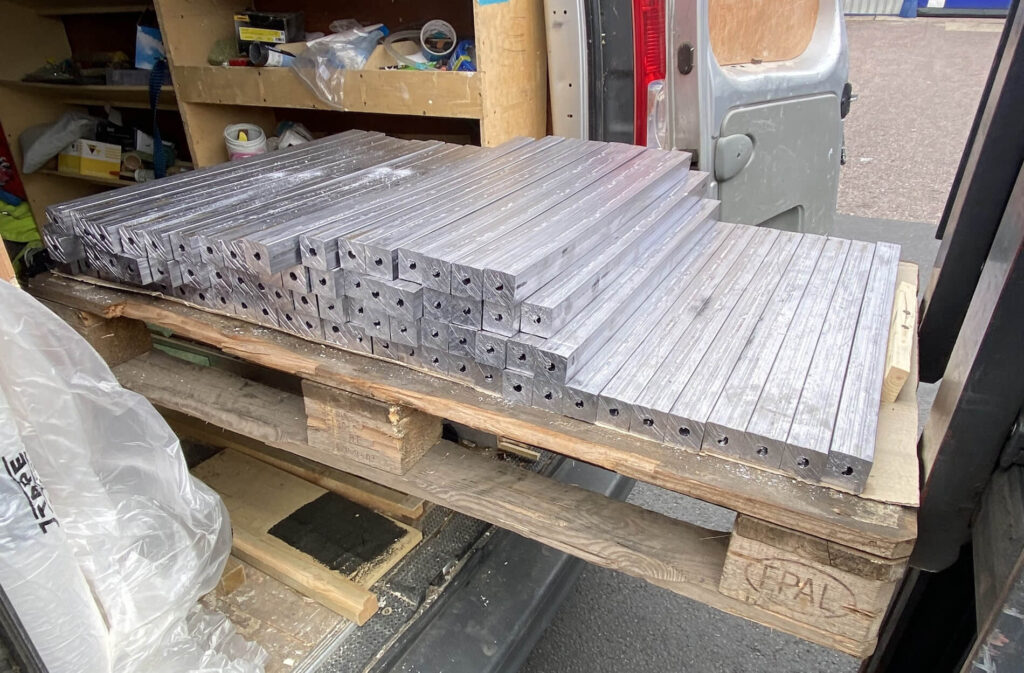
Two ways to put it right. Where the original pocket has room, we drop in a supplementary cast-iron weight on the same cord — quickest, leaves the original components in place. Where the pocket is already full, or the increase in glass weight is substantial, we swap the cast-iron weights for lead. Lead is around 1.6 times denser than cast iron, so the same physical envelope holds significantly more mass — even a tight pocket can carry the extra grams without modification to the box.